Let’s start with a quick introduction. Could you share your name, your role title, and what you do?
My name is Jo‑Ann. I’m the Senior Civil Service Representation and Pay Gap Reporting Lead. My role focuses on ensuring equity and fairness for all employees.
If you’re comfortable to, could you talk a bit about your condition and how it affects you?
Yes, of course. I have Usher syndrome type 2, a genetic condition I was born with. It causes severe hearing loss from birth and progressive sight loss over time. My sight began to deteriorate in my teenage years. It’s a degenerative condition inherited from both parents, and I’m now registered as deafblind.
How does that impact you day to day, particularly at work?
It presents a number of challenges. I have no peripheral vision and only a small central field of vision. I also have complete night blindness, which makes winter particularly difficult due to limited daylight. There are also times when I experience functional blindness, for example in low‑light environments where I have no usable vision.
My hearing has become more challenging over time too. I used to rely on lip reading, but as my sight has deteriorated, that’s no longer possible.
Technology helps, but meetings and group settings are challenging. For example, closed captions can be useful, but they rely on having enough vision to read them, which isn’t always possible for me.
Would now be a good time to talk about the support you have in place?
Yes. I would describe it as a bit of a double‑edged sword. I feel very fortunate. I was diagnosed over 23 years ago and have progressed my career into a senior leader role. My condition hasn’t prevented me from maintaining full‑time employment, which is very important to me.
In terms of support, I have workplace adjustments. For example, two large monitors, specialist keyboards and equipment, I have the flexibility to work from home and in the office.
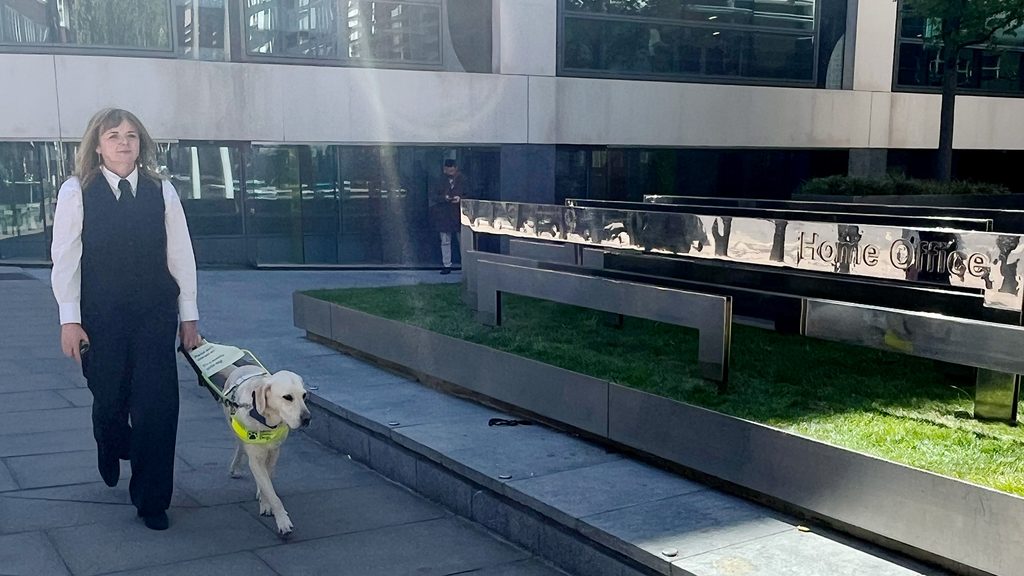
Could you talk about Nikki and how she supports you day to day?
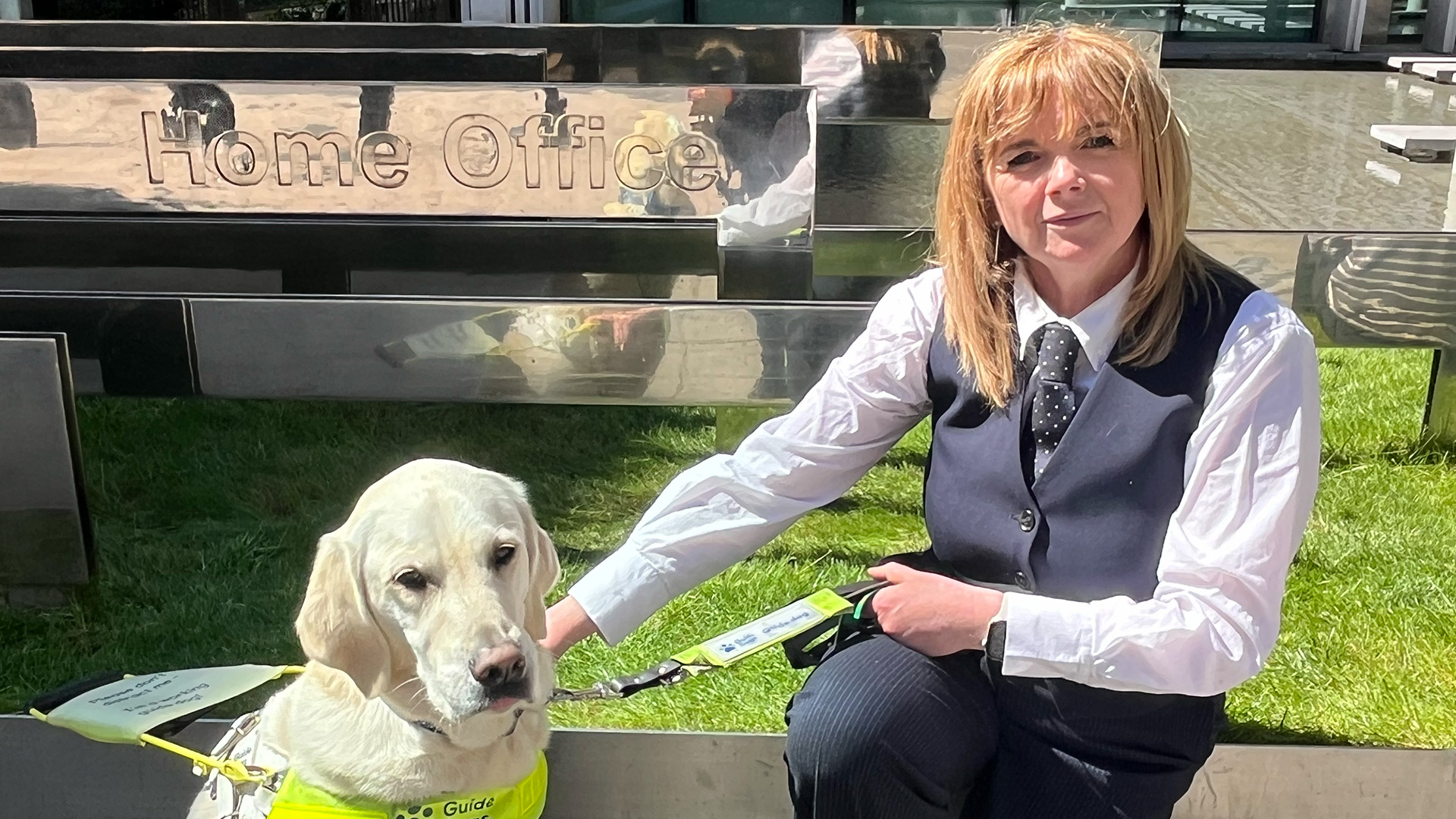
Of course. Nikki is my guide dog and gives me a huge amount of independence. She’s central to me being able to work full time.
On a typical day, I might leave the house and encounter things like bin collections, roadworks, e-bikes or other obstacles. Nikki guides me safely around them and gets me to the station. She can find me a seat on the train, help me navigate busy environments and guide me safely through crowds. Having a seat is important because I can’t always see or hear what’s happening around me, for example when people are moving on and off the train.
Nikki guides me through the station, up stairs, through barriers and out to street level. She’s trained to locate crossings and the tactile cone under the signal box that tells me when it is safe to cross.
At the office, she rests while I work, but when I need to move around, she guides me to meetings, colleagues or the canteen.
She also helps with confidence. In my experience, people are often more comfortable approaching me when I have Nikki than when I use a white cane. At the end of the day, particularly in winter, she safely guides me back to the station and home.
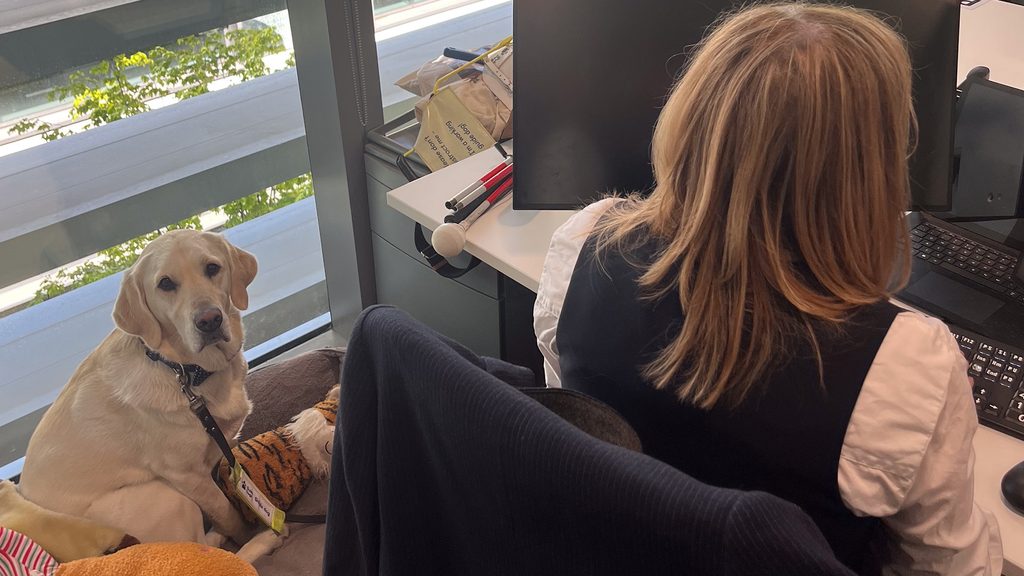
That really brings it to life. Could you also talk about your career journey?
I joined the Civil Service as an Administrative Assistant and stayed in that role for around 10 years. At the time, I didn’t think anyone would want to promote someone like me.
What made the difference was having someone who believed in me, what I would call a disability ally, who recognised my potential and encouraged me to progress. Since then, I’ve moved through the grades and now work at Grade 7 in the Home Office.
What makes the Home Office a good place to work for you?
For me, it’s the people. My colleagues and peers, particularly in HR and across the department, are supportive and respectful of the fact that I may need to work differently.
They understand that I’m most effective when I can work in a way that suits me, and that support enables me to succeed.